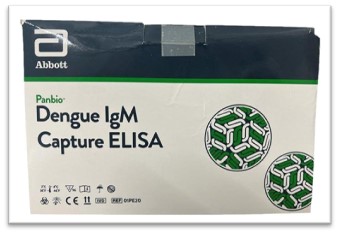
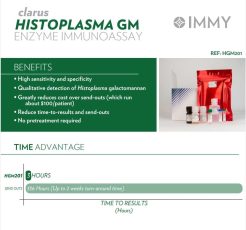
ELISA, or Enzyme-Linked Immunosorbent Assay, is a common laboratory testing technique that detects and counts certain antibodies, antigens, proteins and hormones in bodily fluid samples. This includes blood, plasma, pee, saliva (spit) and cerebrospinal fluid (CSF). “ELISA” stands for “enzyme-linked immunosorbent assay.” Another name for it is an EIA test.
ELISA is often used as a screening tool before more in-depth tests are ordered.
ELISA (Enzyme-Linked Immunosorbent Assay) is a highly sensitive laboratory technique used to detect and quantify antibodies, antigens, proteins, and hormones in biological samples. It is widely used in diagnostics, research, and quality control laboratories for accurate and reliable results.
ELISA is based on the specific binding between antigen and antibody. The test uses enzyme-linked antibodies and a substrate that produces a measurable color change, indicating the presence and concentration of the target analyte.
ELISA is based on the specific interaction between antigens and antibodies. The assay uses enzyme-linked reagents and a substrate that produces a detectable color change. The intensity of this color is directly proportional to the concentration of the target analyte in the sample.
Test Runtime (min): 63 – 73
Test Pack Size: 96 Wells/Kit
Test Runtime (min): 65 – 75
Test Pack Size: 96 Wells/Kit
Test Runtime (min): 103 – 113
Test Pack Size: 96 Wells/Kit
Test Runtime (min): 80 – 90
Test Pack Size: 96 Wells/Kit
Test Runtime (min): 75 – 85
Test Pack Size: 96 Wells/Kit
Test Runtime (min): 67 – 77
Test Pack Size: 96 Wells/Kit
Test Runtime (min): 82 – 92
Test Pack Size: 96 Wells/Kit
Test Runtime (min): 76 – 86
Test Pack Size: 96 Wells/Kit
Test Runtime (min): 67 – 77
Test Pack Size: 96 Wells/Kit
Test Runtime (min): 94 – 104
Test Pack Size: 96 Wells/Kit
Test Runtime (min): 101 – 111
Test Pack Size: 96 Wells/Kit
Test Runtime (min): 67 – 77
Test Pack Size: 96 Wells/Kit
Test Runtime (min): 87 – 97
Test Pack Size: 96 Wells/Kit
Test Runtime (min): 118 – 128
Test Pack Size: 96 Wells/Kit
Test Runtime (min): 118 – 128
Test Pack Size: 96 Wells/Kit
Test Runtime (min): 92 – 102
Test Pack Size: 96 Wells/Kit
Test Runtime (min): 93 – 103
Test Pack Size: 96 Wells/Kit
Test Runtime (min): 89 – 99
Test Pack Size: 96 Wells/Kit
Test Runtime (min): 64 – 74
Test Pack Size: 96 Wells/Kit
Test Runtime (min): 76 – 86
Test Pack Size: 96 Wells/Kit
Test Runtime (min): 82 – 92
Test Pack Size: 96 Wells/Kit
Test Runtime (min): 77 – 87
Test Pack Size: 96 Wells/Kit
Test Runtime (min): 62 – 72
Test Pack Size: 96 Wells/Kit
Test Runtime (min): 105 – 115
Test Pack Size: 96 Wells/Kit
Test Runtime (min): 94 – 104
Test Pack Size: 96 Wells/Kit
Test Runtime (min): 91 – 101
Test Pack Size: 96 Wells/Kit
Test Runtime (min): 106 – 116
Test Pack Size: 96 Wells/Kit
Test Runtime (min): 119 – 129
Test Pack Size: 96 Wells/Kit
Test Runtime (min): 103 – 113
Test Pack Size: 96 Wells/Kit
Test Runtime (min): 105 – 115
Test Pack Size: 96 Wells/Kit
ELISA (Enzyme-Linked Immunosorbent Assay) is a widely used analytical technique designed to detect and quantify specific proteins, antibodies, antigens, and hormones in biological samples. Known for its high sensitivity and accuracy, ELISA plays a critical role in modern diagnostics, clinical research, and pharmaceutical applications.
ELISA (Enzyme-Linked Immunosorbent Assay) is a laboratory technique used to detect and measure antibodies, antigens, proteins, and hormones in a sample.
ELISA works on the principle of antigen-antibody interaction. An enzyme-linked reaction produces a color change, which indicates the presence and quantity of the target substance.
Common sample types include:
ELISA is widely used for:
ELISA is highly sensitive and specific, making it a reliable method for diagnostic and research purposes.
Typically, ELISA tests take 2 to 5 hours, depending on the protocol and sample type.
Point-of-Care Testing (POCT) refers to medical diagnostic testing performed at or near the site of patient care. Instead of sending samples to a laboratory, results are available quickly—often within minutes—allowing for faster clinical decisions.