
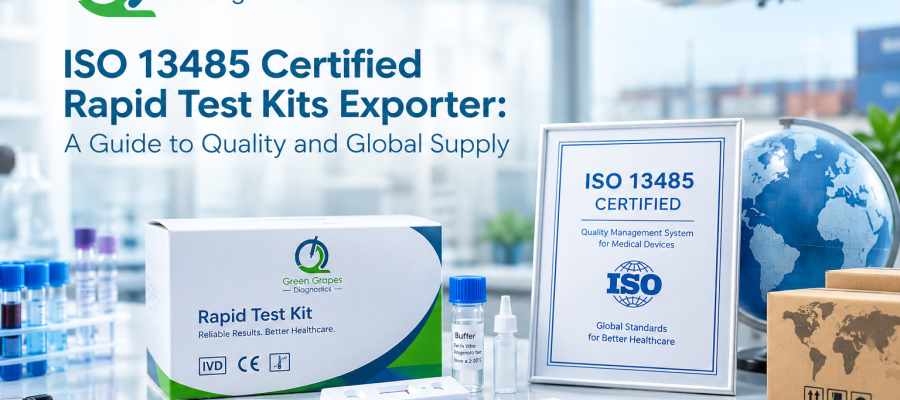
The demand for dependable diagnostic products continues to grow as hospitals, laboratories, healthcare distributors, and medical institutions work to improve access to timely testing. Rapid test kits play an important role in this process by supporting the detection of specific health conditions and helping healthcare professionals make informed decisions.
For international buyers, selecting the right supplier involves more than comparing product prices. Quality management, regulatory compliance, product documentation, packaging, and dependable delivery are all important considerations.
An ISO 13485 certified rapid test kits exporter can be a valuable partner for organisations seeking medical diagnostic products supported by appropriate quality management processes. Understanding what ISO 13485 means and what to check before placing an export order can help buyers make better procurement decisions.
What Is ISO 13485, and Why Does It Matter for Rapid Test Kits?
ISO 13485 is an internationally recognised quality management system standard designed for organisations involved in medical devices and related services. It focuses on processes that support consistent product quality, regulatory compliance, risk management, documentation, and continual maintenance of the quality management system.
For businesses involved in diagnostic products, quality management is particularly important because product performance, manufacturing controls, traceability, and handling requirements can affect how products are used in healthcare settings.
However, ISO 13485 certification should not automatically be interpreted as approval of every product sold by a company. Buyers should verify the scope and validity of the supplier’s certificate and separately confirm that the specific diagnostic kits meet the applicable regulatory requirements in their destination market.
Why Choose an ISO 13485 Certified Rapid Test Kits Exporter?
Working with a supplier that maintains an appropriate quality management system can help importers establish a more structured procurement process. When evaluating an ISO 13485 certified rapid test kits exporter, consider the following factors.
1. Quality Management and Process Control
A structured quality management system supports documented procedures, defined responsibilities, and controls across relevant business activities. These processes can help suppliers identify quality issues and maintain consistent operating practices.
Buyers should ask about quality assurance procedures, product release controls, and the documentation available for the products they intend to purchase.
2. Product Documentation and Traceability
Diagnostic products may require technical documentation, batch or lot identification, instructions for use, storage details, and other supporting records.
Clear documentation helps importers track products, manage inventory, and respond to questions about a particular shipment. The documents required will depend on the product, its intended use, and the destination country’s rules.
3. Regulatory Compliance in Destination Markets
Medical device and diagnostic product regulations vary between countries. A product that can be supplied in one market may require additional registration, authorisation, labelling, or documentation before it can be imported or distributed elsewhere.
Before placing an order, buyers should confirm which approvals and registrations are required in their country and whether the exporter can provide the relevant supporting documents.
4. Reliable Export Coordination
International procurement involves several steps, including order confirmation, document preparation, packaging, shipment arrangements, and coordination with logistics partners.
An exporter with an organised supply process can help buyers understand shipment requirements, expected dispatch schedules, and the documents needed for customs clearance. Actual delivery times will depend on factors such as destination, transport arrangements, and customs procedures.
5. Communication and After-Sales Support
Responsive communication is important when purchasing medical diagnostic products internationally. Buyers should have a clear point of contact for product specifications, order updates, documentation requests, and queries concerning supplied goods.
Discussing these arrangements before ordering can help establish expectations and support a long-term business relationship.
Types of Rapid Test Kits and Diagnostic Products Available for Export
The products supplied by a diagnostic exporter depend on its portfolio, manufacturing partners, and regulatory authorisations. Buyers should confirm the availability and intended use of each product before making procurement decisions.
Common diagnostic product categories include:
- Rapid test kits: Designed to provide test results within a relatively short period, depending on the test and its instructions.
- ELISA kits: Used in laboratory testing to detect or measure specific substances through enzyme-linked immunoassay methods.
- RT-PCR kits: Used in molecular testing workflows to detect targeted genetic material.
- In-vitro diagnostic (IVD) products: Products intended for examining human-derived samples outside the body, subject to their specific intended use.
- Surgical consumables: Supplies used in clinical and surgical environments.
- Medical essentials: Products used by healthcare facilities, laboratories, and medical distributors.
Not all products have the same storage conditions, shelf life, testing requirements, or regulatory classification. Importers should review the instructions for use, product specifications, and handling requirements for every item.
How to Evaluate a Rapid Test Kit Supplier Before Importing
Selecting a supplier is an important step for healthcare distributors and medical procurement teams. A structured evaluation can help reduce avoidable delays and documentation issues.
Verify the Quality Certificate
Request a copy of the supplier’s ISO 13485 certificate. Check the issuing certification body, validity dates, certified organisation, and scope of certification. Where necessary, verify the certificate with the issuing body.
Also confirm whether the certificate relates to the relevant activities and product categories.
Check Product-Specific Regulatory Documents
Ask for the documentation applicable to each diagnostic product. Depending on the product and destination, this may include product registration details, conformity documentation, authorised labelling, instructions for use, or other required records.
Do not assume that an ISO certificate alone satisfies all import or market-access requirements.
Review Performance and Product Specifications
Understand the test’s intended purpose, sample requirements, interpretation procedure, limitations, storage conditions, and shelf life. For diagnostic products, performance information should be relevant to the specific kit and its intended use.
Buyers should also confirm that the supplied product matches the technical specifications agreed upon in the purchase order.
Confirm Packaging and Shipping Conditions
Some diagnostic products require particular temperature ranges, protection from moisture, or other handling precautions. Ask the supplier how products are packed, stored, and transported, and determine whether any special shipping conditions apply.
Discuss Order Quantities and Delivery Schedules
Before confirming an order, establish minimum order quantities, lead times, shipping arrangements, payment terms, and the procedure for handling damaged or non-conforming goods.
Clear written terms can help prevent misunderstandings during international procurement.
Green Grapes Diagnostics: Supporting International Diagnostic Supply
Green Grapes Diagnostics is an India-based supplier and exporter of diagnostic kits, surgical products, and medical essentials for healthcare organisations and international buyers. Its product portfolio includes rapid test kits, IVD products, ELISA kits, RT-PCR kits, and other medical supplies.
The company works with customers across international markets, including Africa and the Middle East, with a focus on product sourcing, export coordination, and shipment documentation.
For hospitals, laboratories, and medical distributors evaluating a potential supplier, Green Grapes Diagnostics can be a point of contact for discussing diagnostic product requirements and export arrangements.
Buyers should confirm the availability of specific products, the applicable regulatory documentation, the intended use of each kit, and the relevant certification details before placing an order. Where ISO 13485 certification is a procurement requirement, request and verify the certificate and its scope rather than relying on a general supplier description.
Clear communication about specifications, order quantities, delivery expectations, and destination-country requirements can help both parties establish a more efficient procurement process.
Why International Buyers Need to Understand Destination-Country Requirements
Exporting diagnostic kits involves more than arranging transportation from one country to another. Each destination may have its own rules for medical devices, in-vitro diagnostic products, product registration, labelling, import permits, and local representation.
Before shipping, importers should determine:
- Whether the product is authorised or registered for the intended market.
- Whether the importer needs a licence or permit.
- Which certificates and supporting documents customs or health authorities require.
- Whether labels and instructions must be provided in a specific language.
- What storage, transportation, and shelf-life conditions apply.
- Whether additional testing, inspection, or conformity procedures are necessary.
These checks are particularly important when importing diagnostic products for clinical or laboratory use. Buyers should consult the relevant national regulatory authority or qualified regulatory professionals when requirements are unclear.
Conclusion
Choosing a suitable diagnostic supplier requires careful consideration of quality management, product documentation, regulatory requirements, and export capabilities. ISO 13485 can provide useful information about an organisation’s quality management system, but buyers must also verify product-specific requirements and destination-country approvals.
An ISO 13485 certified rapid test kits exporter should be evaluated on the validity and scope of its certification, the documentation it can provide, the suitability of its products, and its ability to coordinate international orders.
Green Grapes Diagnostics offers a range of diagnostic products and medical supplies for international buyers. Healthcare distributors, laboratories, and procurement teams can contact the company to discuss their requirements and confirm the relevant product details, certifications, and export arrangements before proceeding with an order.
Frequently Asked Questions (FAQs)
1. What does ISO 13485 certification mean for a diagnostic supplier?
ISO 13485 is a quality management system standard for organisations involved in medical devices and related services. Certification indicates that the organisation’s quality management system has been assessed against the standard within a defined scope. It does not, by itself, establish that every product is approved in every country.
2. What should buyers check before importing rapid test kits?
Buyers should verify the supplier’s relevant certificates, product specifications, intended use, regulatory status, shelf life, storage requirements, labelling, and shipment documentation. They should also confirm the import requirements of the destination country before placing an order.
3. Does ISO 13485 certification guarantee the accuracy of every rapid test kit?
No. ISO 13485 relates to a quality management system rather than serving as a standalone guarantee of the performance of every product. Buyers should review product-specific performance information, applicable regulatory documentation, and the kit’s intended use.
4. What diagnostic products does Green Grapes Diagnostics supply?
Green Grapes Diagnostics lists products such as rapid test kits, IVD kits, ELISA kits, RT-PCR kits, surgical consumables, and medical essentials. Buyers should contact the company to confirm current availability, relevant certifications, destination-market compliance, and export terms.